
Prof. Dr. Kai Illing
Some wellness-like activities such as walking, healthy eating, and relaxation are just as important as preventive examinations done by a family physician. All these factors are important and make a significant contribution to human life expectancy, but Longevity takes it very seriously and claims to be able to do much more.
1.Longevity
From a scientific point of view, Longevity, sometimes also referred to as anti-aging, follows a multidisciplinary scientific approach to understanding the mechanisms of aging, identifying potential interventions, and developing strategies to promote Longevity and delay, prevent, or reverse age-related diseases with a special focus on quality of life at all times. Those who want to prevent a stroke should begin comprehensive Longevity medicine in their forties. Those who want to improve their body styling should start in their thirties
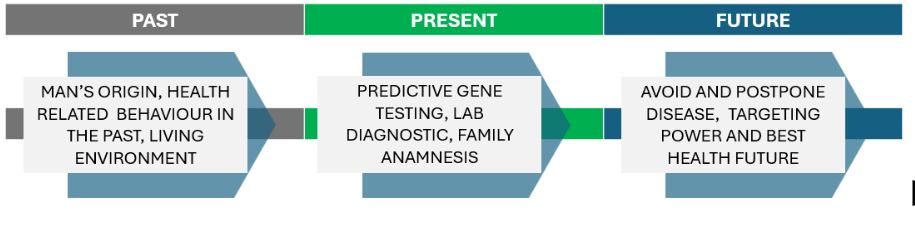
Diagnosis: As far as the medical approach is concerned, a comprehensive diagnosis must be the very beginning. Predictive genetic testing is a set of examinations to detect disease-causing (pathogenic) changes or mutations in genetic material. Behind this are many other medical and laboratory diagnostic approaches. An in-depth medical interview must be another part of the diagnostic process.
Interventions: The range of interventions in a tourist Longevity resort can, for example, comprise the following items:
1. Nudging: A term that suggests a construction approach related to architecture, that encourages exercise. This includes well-designed staircases that discourage the use of elevators and instead encourage taking the stairs. Nudging also includes, for example, the approach of keeping the bedroom slightly cool to reduce the risk of nocturnal and heat-related strokes.
2. Lifestyle: Encompasses a comprehensive range of services focusing on exercise, nutrition, and relaxation
3. Heat and cold interventions.
4. Light therapy including cold laser (Photobiomodulation, PBM).
5. Infusions with nutrients, NAD+ Booster, etc.
6. Dietary Supplements.
7. Hormones (Hormone Replacement Therapy, HRT).
8. Pharmacological interventions (Metformin, Rapamycin (mTOR), Senolytics).
9. Interventions on cellular level (IHHT etc.)
10. Minimally invasive cosmetic surgery (e.g. thread lifting).
There are other treatments as well (Nanotechnology, Cryonics), but they should preferably take place in a hospital.
The goal is to provide the patient with a personalized manual as part of highly individualized Longevity medicine, in which the patient's risk factors are predicted, along with information on how to avoid them. We want to inform the forty-year-old patients how they can prevent or at least delay dementia or a stroke if both are predicted for the age of sixty
2. Longevity in a tourist setting
As far as hotels are concerned, Longevity may serve as a brand-new positioning within the hotel market that does not deal with soft-medical issues such as wellness and pampering, but with high-tech medical interventions that take place in a luxury environment embedded in stunning natural surroundings.
Target groups that may be attracted to a Longevity resort might be as follows:Those interested in a pampering resort that also offers high-quality medical interventions (age 35+). High performers who want to maintain their professional power (age 40+).Explorers who want to experience what Longevity means (age 45+).Those seeking medical prevention to help avoid or postpone disease (age 50+).Retirees longing for many healthy years to participate actively in the world's development (age 60+).Older individuals who want to play an active role in their families (age 70+).
Of course, behind the target groups lie different age groups, purchasing power, medical preferences, and cultures. But they all strive for a longer life with an enjoyable health status.
The contribution of a tourist setting, such as an undisturbed view of mountains or beaches, relaxing facilities like pools and saunas, and relaxing treatments such as massages, contributes sustainably to human health. A high number of research articles in the field of consumer research prove that,at least in wellness hotels, relaxation is one of the most important instruments to reach a state of tranquility at the end of a stay in a hotel. The means-end-chain logic in wellness-driven hotels often starts with relaxation and ends in power, performance, and perfection, but not explicitly in a longer lifespan.This is what the Longevity approach stands for.
Besides the great healing opportunities, a Longevity resort also offers remarkable economic success. More treatments are sold, the treatments last longer, and due to medical success, patients return more frequently. In an average wellness hotel in Central Europe, guests book approximately 0.2 treatments per overnight stay. In medical hotels, there are more than 2 treatments per day. However, it must be considered that investments in a Longevity resort are higher than in conventional hotels.
Prof. Dr. Kai Illing TDC Consulting GmbH Medical Hotel d.o.o. Vienna - Austria